Why Are My Keywords Not Ranking? 5 Reasons and How to Fix Them
Keyword rankings are the foundation of effective SEO. When your targeted keywords fail to appear in search results, it’s frustrating—and it can impact your site’s traffic and conversions. If you’re asking, “Why are my keywords not ranking?” you’re not alone. Fortunately, diagnosing and fixing ranking issues is easier than you think—especially with the right tools from SEOToolbox.io.
Below, we break down the five most common reasons keywords don’t rank and show you how to resolve each one using practical tools and features available when you sign up for SEOToolbox.io.
1. Your Website Has Technical SEO Issues
Technical problems can prevent search engines from crawling, indexing, or understanding your pages. Even the best content won’t rank if technical SEO barriers block search engines.
Common technical issues include:
- Broken links or 404 errors
- Missing or incorrect sitemaps
- Poor mobile experience
- Slow page loading times
- Incomplete or incorrect metadata
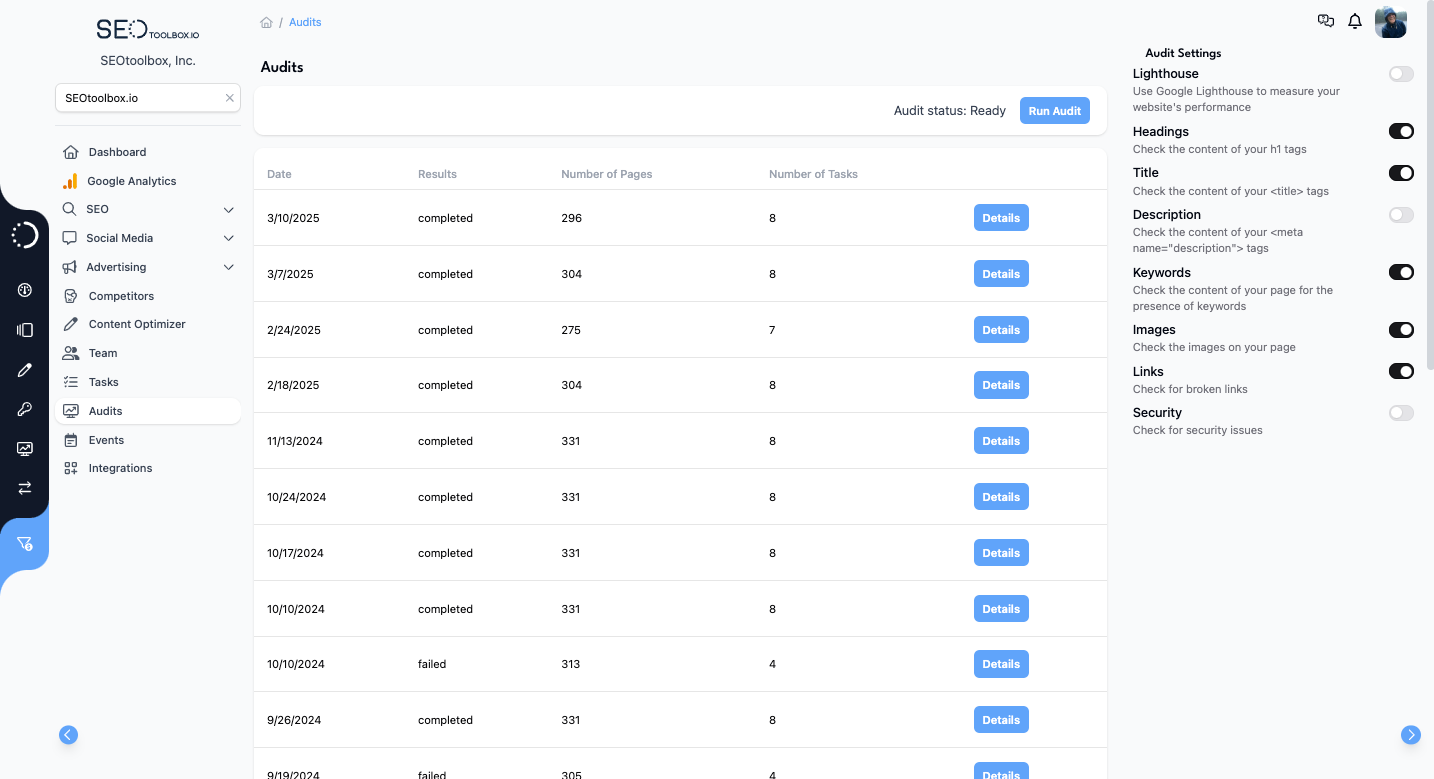
How to Fix: The Website Audit Tool offers a full scan of your website. It detects technical issues and generates a detailed report with actionable recommendations. This report highlights errors that may be hurting your keyword rankings—enabling you to fix them before they impact your search visibility.
2. Your Content Isn’t Fully Optimized
Even if you publish frequently, your content might not satisfy user intent or meet search engine requirements for quality and relevance.
Common content problems:
- Poor keyword placement or over-optimization
- Thin content or low word count
- Failing to address searcher questions
- Outdated information
How to Fix: The Content Optimizer Tool analyzes your content compared to top-ranking competitors. It suggests improvements around keyword usage, structure, and topic coverage so your pages meet today’s SEO standards.
Leverage the AI Content Writer Tool to quickly generate optimized articles based on your target keywords—ensuring your content matches what search engines and users expect.
3. You’re Targeting Highly Competitive Keywords
Broad or highly commercial keywords are dominated by large, established sites. It can be unrealistic to expect rapid results for high-competition terms if your site is new or has low authority.
How to Fix:
- Focus on long-tail and niche-specific keywords
- Build topical authority by publishing in-depth content on subtopics
- Use the Keyword Tracker Tool to monitor your ranking progress and identify quick-win opportunities for less competitive terms
4. Your Site Lacks Quality Backlinks
Without strong backlinks from reputable sites, your pages might lack the authority needed to rank for your target terms.
How to Fix:
- Create share-worthy, unique content that attracts links
- Reach out to relevant sites for guest posts or mentions
- Use the audit and tracker features to identify which pages attract links—and which need more promotion
5. Search Engine Algorithms and AI Updates Have Shifted the Landscape
Google’s AI-driven features such as AI Overviews can change how users find websites. Your site may not rank if content isn’t included in these new spaces.
How to Fix: Monitor your brand’s presence in AI search results with the AI Overview Tracker. This feature tells you whether your content appears in Google’s AI-generated overviews and helps you adapt your strategy to maintain relevance.
Key Takeaways and Action Steps
- Run a Website Audit to uncover and fix technical issues.
- Use the Content Optimizer Tool and AI Content Writer Tool to ensure your pages are fully optimized.
- Target achievable keywords and monitor your progress with the Keyword Tracker.
- Check your appearance in Google’s AI Overviews with the AI Overview Tracker.
If you want to take control of your rankings and see results faster, sign up for SEOToolbox.io and access the tools that make SEO easy!